

You First
A Mother's Day letter for Gloria Cansino, and a song for every mother who has been putting herself last
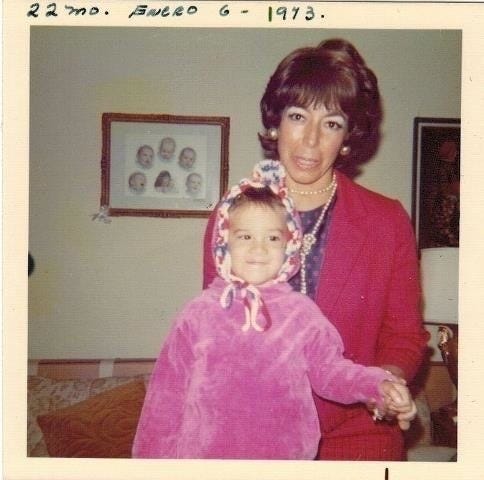
It is Mother’s Day evening. Earlier this morning, after the gym, Wyatt and I splurged a little and went to the Broken Yoke, our favorite breakfast spot in San Diego. We do not go often. Today felt like the kind of day that earned a slow breakfast. His mother lives up in Seattle. Mine has been in heaven since 1998. So it was just the two of us at the table, two men a long way from the women who built them, sharing coffee and quiet gratitude for the fact that we ever had mothers at all. That breakfast is where this letter began.
There is one thing I wish I had said to my own mother in the last few years of her life, and I never got to say it. I want to say it to you instead.
The thing I wish I had said is this. Mom, you first.
She died too young, at sixty-five, in February of 1998, because in the most important arithmetic of her life, she did not put herself first. I will tell you that story in a moment. But before I do, I want to give you the song I wrote for her this weekend, and for you.
Listen to You First here on Suno at suno.com/song/070dbda6-51cb-453d-829e-fa66729c90c6.
The song runs about three minutes. The chorus is two words. You first. I wrote it because the world has been telling mothers their whole lives to take care of everyone else, and the world is wrong. The strongest love a mother gives is the one where she still lives. That is the line my own mother did not get to learn in time to use.
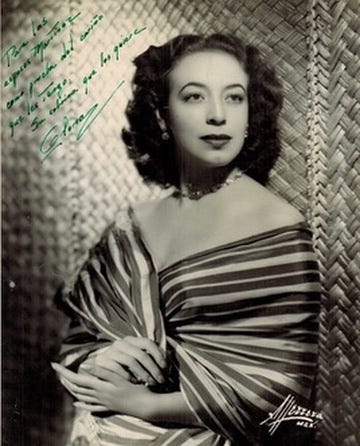
Gloria
My mother’s name was Gloria Cansino. She was born on May 9, 1932, in Bogotá, Colombia. Yesterday would have been her ninety-fourth birthday. She became one of the working actresses of Mexico’s Época de Oro, the Golden Age of Mexican cinema, in its last and most lyrical chapter. She appeared in Ramón Peón’s Nuestras vidas in 1950. She played Marta in Alberto Gout’s Mujeres sacrificadas in 1952, opposite the great Ninón Sevilla. She danced on screen in Maratón de baile in 1958. And in 1959, at twenty-seven years old, she was cast as the female lead in Ismael Rodríguez’s La ciudad sagrada, a film shot in the Yucatán pyramids, performed partly in the Maya language. Rodríguez was one of the great directors of the twentieth century. He gave my mother top billing. If you would like to see her filmography or follow her work, her IMDb page is at imdb.com/name/nm0134446, and the family tribute page I built for her years ago is at facebook.com/gloriaacansino.
Her name was Cansino, the same name carried by Rita Hayworth, born Margarita Carmen Cansino, of the Sevillian dance dynasty. The two families have no documented connection. But the name has always carried dance in it.
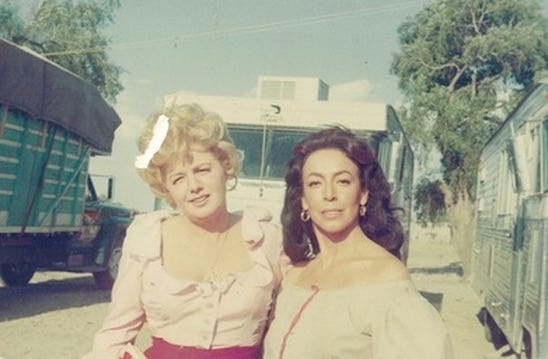
Tonight Wyatt and I will probably watch one of her films. The one we usually return to is The Scalphunters, the 1968 United Artists Western directed by Sydney Pollack, starring Burt Lancaster, Shelley Winters, Telly Savalas, and Ossie Davis. The film was shot in the desert outside Torreón, Mexico, and family memory has always placed my mother in the background of it, dancing in the dust kicked up by the horses during the Mexico shoot. You can rent or buy it on Apple iTunes if you ever want to see her in motion. That is the image of her I carry on Mother’s Day. Not the hospital. The desert. A thirty-six-year-old Colombian woman dancing in a Western with some of the biggest names in Hollywood from that era.
The role she chose
My mother had a real career. She was working with the best directors of her era. She could have kept going. She chose not to.
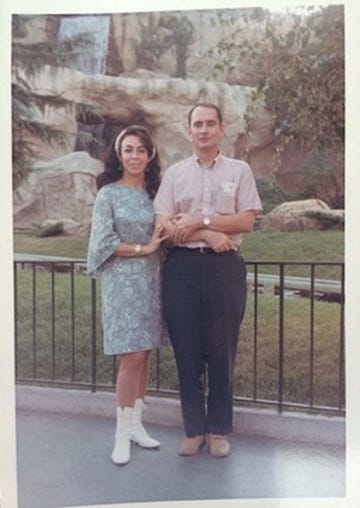
She married my father, Mel, an American who would later spend years overseas, and when I was born in 1971 she made the trade that women of her generation often made. She took the career she had built since she was eighteen and folded it into a single new full-time role. Mother. She was no longer Gloria Cansino, female lead. She was mamá. And she was, without any hesitation in my voice as I write this, the best mother in the world. The most loving, the sweetest, the most patient woman I have ever known. She taught me what love is. Everything I have ever done in my career — every book, every coaching call, every Substack letter you have read from me — comes downstream from the love she gave me when I was small.
I want every mother reading this letter to hear that sentence again, because most of you have done some version of the same trade in your own life. The role you chose was a real career. The work you did in that role made everything else possible. I am the man I am because Gloria chose to be my mother instead of the next Ismael Rodríguez lead. I would not trade that choice for any career she could have had. She probably would not have, either.
How I became Jorge Cruise
I want to tell you, on this particular Mother’s Day, the full version of how I became the writer you are reading right now, because every single piece of it traces back to one woman in a hospital bed in San Diego in late January of 1998.
I was twenty-seven years old. I had finished my undergraduate work at UC San Diego in exercise physiology. I had been training private clients at a gym in La Jolla. I had read every Anthony Robbins book I could buy at Barnes & Noble. I had a website that almost nobody read. I had no publishing deal, no manager, no agent, no book. I had dreams. I had no résumé that suggested those dreams were on the verge of becoming anything. My mother, dying in a hospital, was the only person in my life who already believed I would become the man I am today.
In the last week of her life, when she could barely speak, she pulled me close one afternoon and gave me a single instruction.
“Take it to Oprah.”
It was not a hope. It was not a wish. It was an assignment. She had been watching me work for years. She had seen the clients I was training. She had read the early drafts of the program that would eventually become my first book. She had watched me underline every page of Anthony Robbins. She knew, the way mothers know, that her son’s message belonged on the biggest stage in America, and the biggest stage in America in 1998 was Oprah Winfrey’s. She did not have the energy left to argue with me about it. She just gave me the assignment and trusted that I would carry it out.
She passed away on February 5, 1998.
I went to work.
Eight months later, I was on The Oprah Winfrey Show. It was the end of 1998. I still did not have a book. I had a website that Oprah’s team had somehow found in the very early days of the internet, when a website was something a man built in his apartment with a friend who knew HTML. I said yes the way you say yes to a door your mother has told you was about to open even when nothing in your résumé suggests the door should open at all.
That single afternoon on Oprah’s stage changed everything.
In 2001, Rodale Press signed me to write my first book. The book was called 8 Minutes in the Morning. The whole plan was eight minutes a day. It became an international bestseller in sixteen languages. Anthony Robbins, the same Anthony Robbins whose books I had been reading in college at my mother’s kitchen table, wrote the foreword. I never asked him to. He offered. My mother’s instruction had reached up into the universe and pulled down everything I needed to start the career I have now had for twenty-five years.
I am now writing my fortieth book.
Every single one of them has been hers. I have never written a book that was not, at some level, an attempt to put into the hands of strangers the kind of practical health information my mother did not have in her own hands when she needed it. I have never coached a client whose life did not, in some small way, become a second chance for my mother. I have never written a Substack letter, including this one, that was not in some way addressed to her. That is the secret of every author you have ever read. The book is always addressed to one person, and that person is almost never the reader. In my case, the person is Gloria.
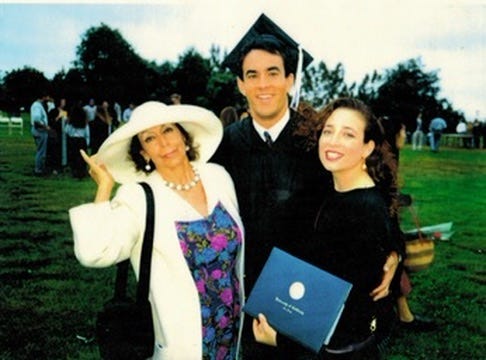
Why she left at sixty-five
I want to tell you, gently and clearly, how she died, because the way she died is the reason I have spent the last twenty-eight years doing this work.
She was a dancer her entire life. By her sixties, her hip was destroyed from the cumulative wear of half a century of dancing. Her doctors recommended a hip replacement. She was afraid of the surgery, and she put it off. To manage the daily pain, she began taking ibuprofen. Many ibuprofen. For years. She did not fully describe to her doctors how much she was taking, and so nobody traced the link in time between the medication and what was quietly happening to her kidneys. The medical literature now calls this pattern analgesic nephropathy — the slow erosion of kidney function from chronic over-reliance on common pain medications. By the time the kidney damage became visible, it was advanced enough that she needed a fistula placed in her arm and was put on dialysis. Her body, already inflamed and depleted, did not have the reserves to recover. She passed on February 5, 1998, in San Diego, at sixty-five years old, three months and four days short of her sixty-sixth birthday.
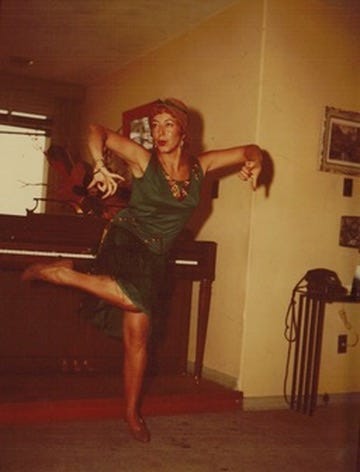
I am telling you this part because I have to. She did not have to die. She did not have the right information at the right time, and she did not give her doctors the full picture of what she was doing to manage her pain. Both of those gaps, the one about information and the one about disclosure, are still costing women in midlife their lives in 2026. I do not want one of them to be you.
The reminder, from a friend
So consider this letter your gentle reminder, on Mother’s Day, from someone who loves you.
The hip you have been ignoring because you do not have time for the surgery. Make the appointment. The medication you are taking more of than the label suggests. Tell your doctor exactly how much. The sleep you have been losing because the kids or grandkids need you at six in the morning and you went to bed at one. Move the bedtime. The medical check-up you skipped last year because it felt indulgent. Schedule it tomorrow. None of these are dramatic. They are how women in midlife stay alive long enough to see their grandchildren grow up.
The strongest love a mother gives is the one where she still lives. You first, mamá. This week. Starting today.
What I learned to give you
There is an idea I learned years ago from Jack LaLanne, the father of American fitness, who lived to ninety-six in a body that worked until almost the last week of his life. Jack used to say that your waistline is your lifeline. He meant it literally. The size of your waist, more than your weight on a scale, more than almost any other single number we have, predicts how long and how well any of us will live. Belly fat is not cosmetic. It is inflammatory. It is the body’s way of storing the kind of slow chemical damage that, in my mother’s case, eventually became damage no surgery could undo.
I have spent twenty-eight years building practical tools for women in midlife to use to shrink that waistline at home, gently, without GLP-1 medications and without anything complicated. 8 Minutes in the Morning was eight minutes a day. That was the whole plan. Every book I have written since has been some version of the same promise. Easy. Practical. Sustainable. Built for a mother who does not have time for anything that is not.
I have a free guidebook called Belly Goes First. It is the foundation of everything I have learned. It contains my Zero Hunger Water formula, which you can make at home for pennies. It contains a 19-day plan to get into beautiful shape from your own kitchen, including the protein-and-movement framework that can help women in their fifties, sixties, seventies, and beyond restore lost lean muscle. It is never too late. You can download it free at skool.com/bellygoesfirst. A Mother’s Day gift, from her son.
If you want company while you put yourself first, I host a coaching meeting every Monday night at five p.m. Pacific. The door is always open. There is no charge to drop in. I do this because my mother did not have a room like that to drop into, and I do not want any of you to be in the same position she was.
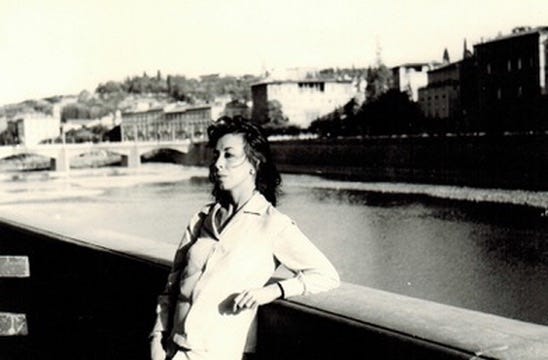
To my mother
To my own mother, Gloria — born on a Saturday in Bogotá in 1932, lost on a Thursday in San Diego in 1998, the best mother in the world, the woman who chose me over a film career she had built since she was a teenager, the woman who pulled me close in her last week and pointed me toward a stage she would not live to see me stand on — I am still doing the assignment, Mom. Forty books in. Still going. Love you, Mom. Happy Mother’s Day. I miss you every single day.
And to every mother reading this, especially the tired ones, and the ones doing it alone, and the ones who suspect they are not doing enough — you are doing more than enough. You are doing the work that makes every other kind of work possible. Happy Mother’s Day.
Please share this letter and the song with one mother in your life who needs to hear it today. That is the only thing I am asking. If a friend of yours is one ibuprofen, one skipped check-up, one unattended hip away from a story like Gloria’s, be the one who forwards her this letter. That is how women in our community take care of each other.
You first.
Carry it well.
— Jorge