

Why Your Waist Is the New Vital Sign
Issue 01 of The Belly Goes First Report · Del Mar, California

Happy Memorial Day.
I hope you’re somewhere good right now. A backyard. A beach. A grill with friends. Someone you love within arm’s reach. And I hope, before you got there, you took a minute to think about the men and women who made this country, and the ones who didn’t come home from making it.
I’m writing you from Del Mar this morning before the day really gets going. Because today, of all days, is the right day to start something.
Welcome to Issue 01 of The Belly Goes First Report— my all-new weekly. Every Monday, the kind of every Monday that becomes a habit before it becomes a tradition, I’m going to sit down and write you a letter. A real one. Not a marketing email. A letter. From wherever I happen to be when Monday arrives.
I’m going to take you behind the curtain of a movement I’ve been building for twenty-five years and am finally bringing into the open. I’m going to introduce you to the people building it with me. I’m going to teach you the science I’m staking the rest of my career on. And I’m going to invite you in — not as a reader, as a member.
Let’s go.
Lunch at Las Brisas
Eleven days ago, on Thursday, May 14, I drove up to Laguna Beach for a lunch I’d been looking forward to for months.
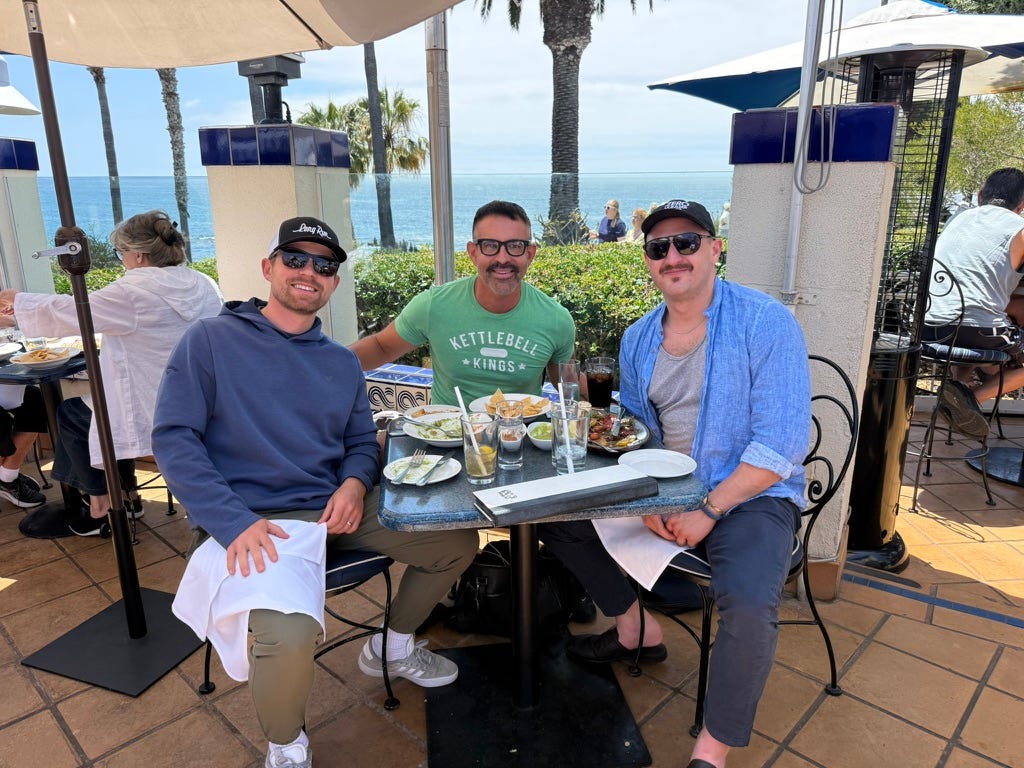
If you’ve never been to Las Brisas, let me set the scene. It sits on the cliffs at 361 Cliff Drive, just north of Laguna’s main beach. The building goes back to 1938, when it opened as the Victor Hugo Inn and pulled Hollywood stars up the coast for the view and the privacy. In 1979 it was reborn as Las Brisas — Spanish for the breezes — and it has been Laguna’s most iconic cliff-top restaurant ever since. Sea-to-table Mexican. White stucco. Bougainvillea. That particular Pacific blue that turns silver at the edges, and a patio where the temperature is exactly right and you stop noticing the temperature at all.
It has also, quietly, become the unofficial Zero Hunger Water office.
This is where the real conversations happen. Not in a conference room. Not over Zoom. On a cliff in Laguna with the ocean below us and three plates of something fresh in front of us. And eleven days ago I sat down there with two men I want you to know.
Stephan Peeler — my cofounder
The first is Stephan Peeler.
If you’ve been reading me for a while, you’ve already met him. A couple of weeks ago I published a letter introducing Stephan as my cofounder. Short version:
Stephan is my Sigma Chi fraternity brother. That’s where this starts — through shared values and years of genuine friendship. His family’s roots trace directly to the founding of Cheerwine, the legendary cherry soft drink created in Salisbury, North Carolina in 1917, family-owned for one hundred and nine uninterrupted years and counting.
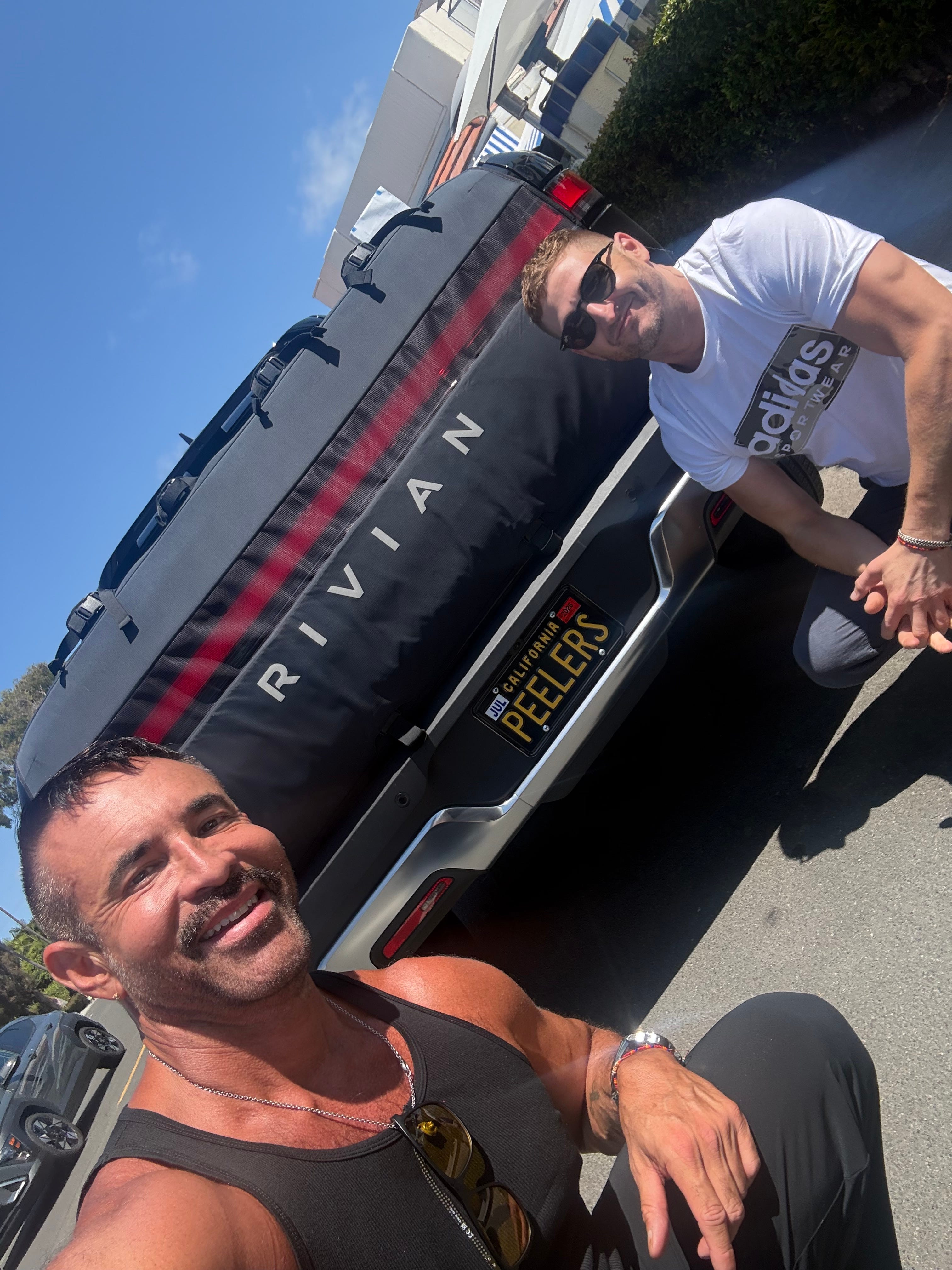
If you’ve spent time in the American South, you already know what Cheerwine means down there. For everyone else: imagine a brand so genuine, so trusted across generations, that families seek it out in every city they move to and pass it down to their children the way you pass down a family recipe. That kind of loyalty doesn’t come from marketing. It comes from a century of doing the thing right and meaning it.
Stephan grew up watching that happen — up close, in the offices where his family ran the business. He’s a builder in his own right: founder of Carolina Malt House and Peelers Apparel (the Stoic Series cutoffs I basically live in). What he brings to this partnership is not a spreadsheet about beverage. It is a hundred and nine years of family memory about what it feels like when a community falls in love with a brand and keeps loving it for generations.
You either grew up inside that or you didn’t. He did.
Jake Solomon — our COO
The second man at the table that afternoon was Jake Solomon.
Jake is our Chief Operating Officer. If Stephan is the beverage DNA of Zero Hunger Water, Jake is the hands actually building the product.
While he was still in college at San Diego State, Jake cofounded a beverage company called Bold Brew Coffee. He didn’t write a paper about beverage — he built one, scaled it to over five hundred retailers across all fifty states, and served as CEO until 2020. After Bold Brew, he founded Solomon CPG Consulting in San Diego, where he has spent the years since helping founders in the food and beverage world take an idea on a napkin and turn it into a real product on a real shelf. He is, in the language of our industry, a CPG expert — consumer packaged goods — which is exactly what Zero Hunger Water is.
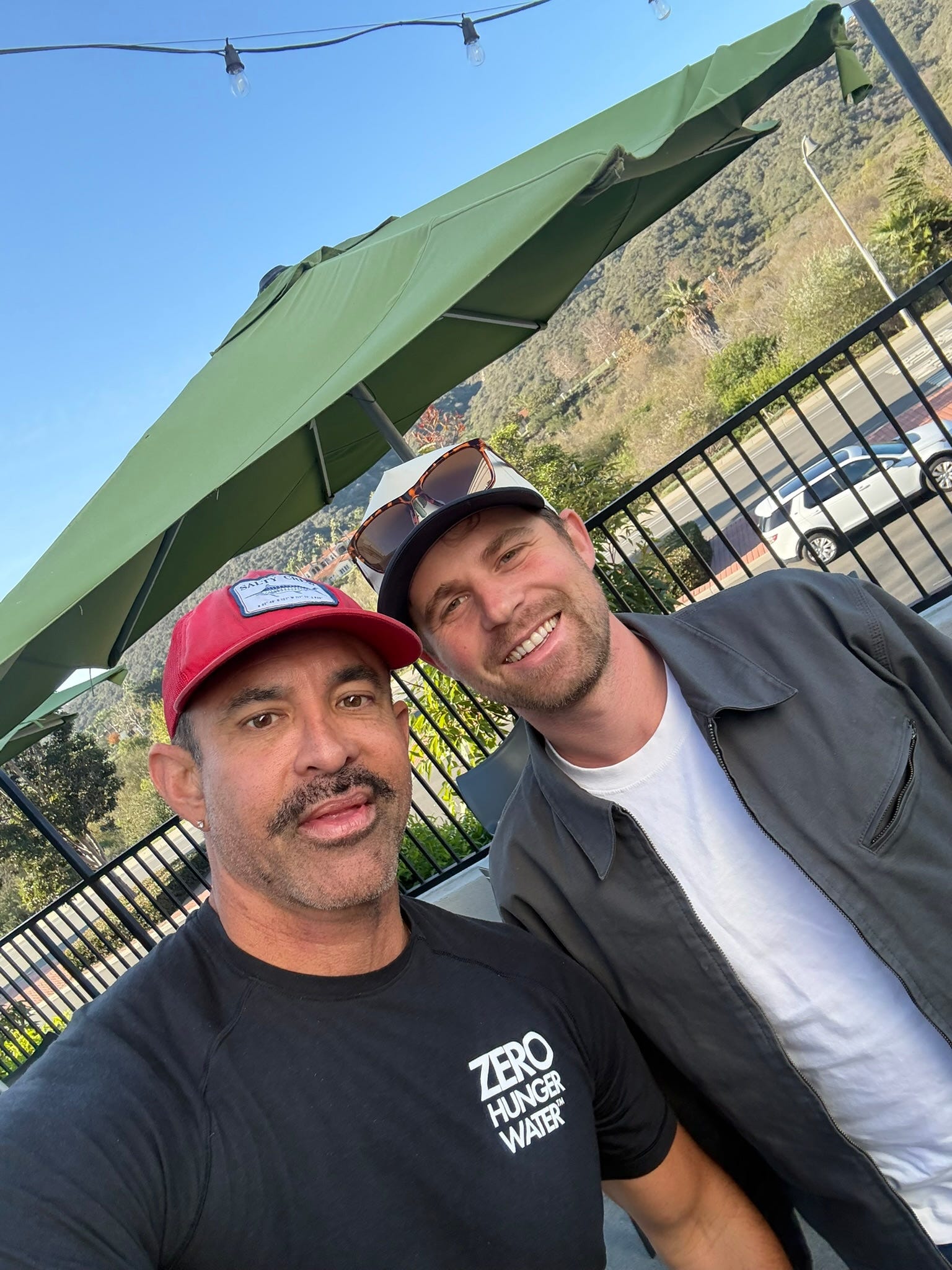
That is Jake’s world. And the people Jake has assembled to formulate this drink are, no exaggeration, among the best in the world at what they do. They are building Zero Hunger Water with nothing artificial — sugar-free, naturally sweetened, naturally delicious.
Without Jake, Zero Hunger Water is an idea. With Jake, it’s a product.
So that was the table at Las Brisas eleven days ago. Stephan, Jake, and me. The beverage legacy, the CPG operator, and the longevity guy who’s about to tell you why he’s been at this for twenty-five years.
Why I’m here in the first place
Let me back up.
I am fifty-five years old as I write this. I started writing about wellness in my late twenties — and the reason I started, the reason I never stopped, is that my mother Gloria Cansino passed away at sixty-four. I wrote about her — and about the decision her passing forced me to make — here. Some stories deserve their own room, so I’ll leave the long version there.
The short version: in my late twenties, in the grief of that year, I made a decision I didn’t fully understand at the time. I was going to figure out, in the most rigorous way I knew how, what actually extends a human life and what only pretends to.
I have spent the twenty-five years since chasing that question. Forty books in pursuit of it — thirty-nine published, and the fortieth, which brings all of this into one place, lands next year. And I want to tell you, in this first issue of this report, what I now believe is the single most important answer I have ever found.
The number one lever for extending a healthy human lifespan is time-restricted eating — and the easiest, most accurate measurement of whether it’s working is your waist.
That is the headline. The rest of this letter is the science, the story, and the three men who walked me to it.
Your waistline is your lifeline — and the science is now overwhelming
Let me give you the data first, because it has gotten very hard to argue with.
A 2024 prospective cohort study of 5,775 metabolically healthy adults from NHANES, published in Reviews in Cardiovascular Medicine by Su and colleagues, found that every 10-centimeter increase in waist circumference was associated with an 8% increase in all-cause mortality, and a 45% higher prevalence of cardiovascular disease. (Source.)
That is not a soft signal. That is a vital sign.
In fact, in 2020 a consensus statement from the International Atherosclerosis Society and the International Chair on Cardiometabolic Risk, published in Nature Reviews Endocrinology, declared exactly that: waist circumference should be measured as a vital sign in clinical practice, alongside blood pressure, heart rate, and temperature. (Source.)
A vital sign. Not a vanity metric. A vital sign.
This is what I have been telling people in my books for two decades, and it is what Dr. Mehmet Oz told me, on camera, in a hallway at Columbia University on July 16, 2008. I wrote about that conversation in detail here, and if you read nothing else this week, read that one and watch the six-minute video.
Dr. Oz pulled out a tape measure, didn’t ask my weight, didn’t ask my BMI, measured my waist, and gave me a formula I have been teaching ever since:
Your waist circumference should be no more than half your height.
For men, that’s under thirty-seven inches. For women, under thirty-two and a half. Measured at the belly button, over the hips. The whole thing costs five dollars at a drugstore and takes five seconds. I wrote more on why this number outperforms BMI here.
What Dr. Oz explained in 2008 — and what the science has only sharpened since — is why. Belly fat is not like the fat on your arms or thighs. It is visceral fat, the fat tucked beneath your abdominal muscles and wrapped around your organs. It sits directly on the portal vein, the highway that runs from your digestive organs to your liver. Everything that fat secretes — inflammatory chemicals, adipokines, toxic signals — goes straight to the liver. The result is metabolic syndrome: high cholesterol, high blood sugar, high blood pressure. On average, excessive visceral fat strips more than fifteen years from a human life.
That is Dr. Oz, almost twenty years ago, describing the biology of what we now know is the most dangerous fat depot in the human body.
He was the first man who walked me to belly goes first.
The mechanism: time-restricted eating, and the 2022 trial that proved it
Here is the part most people miss.
When you stop eating for fourteen, sixteen, eighteen hours, your insulin drops. Insulin is the storage hormone. When insulin is low, your body releases stored fat. And because of where visceral fat sits — right on that portal vein highway to the liver — your body burns it first. The belly is the most accessible reserve. It is the first to go.
This is what science now calls time-restricted eating. Dr. Oz described the biology of it in 2008, before the term was in widespread use. The randomized controlled trials caught up later.
In 2022, the most rigorous trial yet was published in Cell Reports Medicine by Mingqian He and colleagues. They put 169 adults with metabolic syndrome on an eight-hour eating window and compared them against a low-carbohydrate diet. They measured visceral fat by CT scan — the gold standard. The time-restricted eating group reduced their visceral fat by thirteen square centimeters. The low-carb group gained visceral fat. (Source.)
Read that twice. Roughly the same calories. Same protein. The difference was when they ate. The belly group lost the belly. The carb-restricted group gained it.
The belly goes first. Dr. Oz called it in 2008. The data confirmed it in 2022.
My last book, The Cruise Control Diet — a New York Times bestseller six years ago — was built entirely on this premise. Time-restricted eating, working with your body’s natural rhythms instead of against them.
And here is what I will tell you, twenty-five years into this work, with as much honesty as I have ever offered on a page: that book had the right idea, and it was missing the most important piece.
Dr. James DiNicolantonio — the man who showed me why the hunger is fake
Because here is the thing nobody warned me about. Time-restricted eating works. The science is overwhelming. But it is hard. It is genuinely, physically, unpleasantly hard to not eat when you’re hungry.
I had a hundred coaching tricks for white-knuckling through it. None of them solved the actual problem. The disciplined could do it. Everyone else quit on day three.
I didn’t know why. Until COVID.
In the fall of 2020, I read a book called The Salt Fix, by Dr. James DiNicolantonio. The cover stopped me cold: a salt shaker, photographed like a prescription bottle, with the subtitle Why the Experts Got It All Wrong and How Eating More Could Save Your Life. I read the book in three nights, and by the third night I understood something that rebuilt my entire career:
The hunger you feel during time-restricted eating is not real caloric need. It is mineral deficiency.
Here is the mechanism. When insulin drops during a fast — which is exactly what you want — the kidneys excrete sodium at an accelerated rate, and that sodium loss drags potassium and magnesium with it. Within hours, the body is depleted of the three minerals it needs most. And the brain, mineral-starved and confused, fires a hunger signal that feels indistinguishable from genuine hunger.
The science underneath this is striking. A 2008 paper by Morris, Na, and Johnson in Physiology & Behavior showed that sodium deprivation can make the sugar-sensing neurons in the brain’s taste-processing center up to ten times more reactive to sweet cues. The hunger is real. The caloric need is not. The mineral is. (Source.)
This is why people on intermittent fasting reach for sugar at hour fifteen. Their kidneys have dumped sodium. Their brain has cranked the sugar-craving dial to ten. Their willpower is fine. Their minerals are not.
But isn’t salt the villain?
I can almost hear the objection forming as you read this. Because most of us — most of you, certainly me, even my own cofounder Stephan when he and I first started talking about this — were taught a very simple equation from a very young age: salt raises blood pressure. Cut salt. Drink water. Live longer.
That equation is incomplete. It is missing the variable that decides everything.
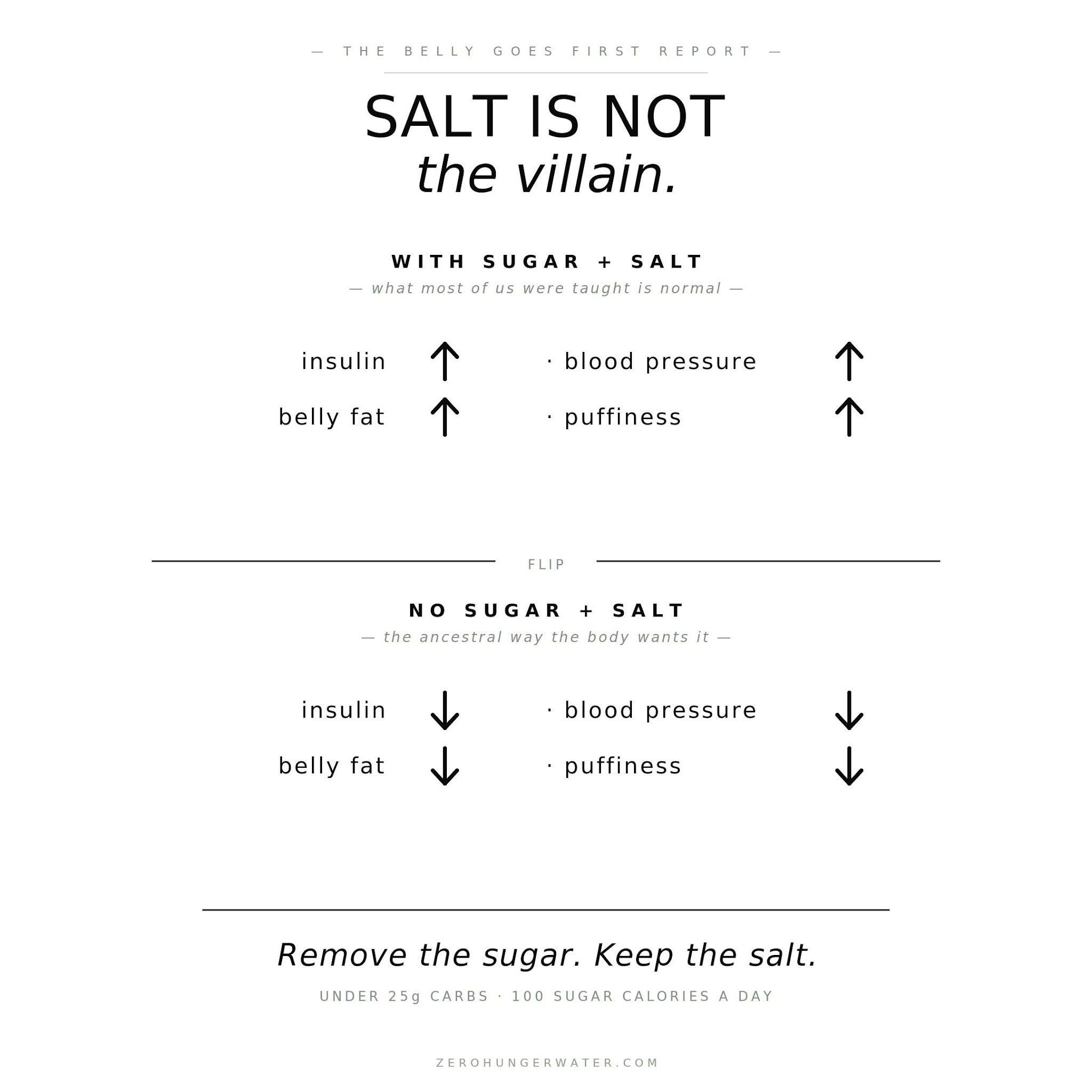
Salt only causes blood pressure trouble when it is paired with a high glycemic load — meaning a diet full of sugar and refined carbohydrates. Here is the actual mechanism. When you eat a meal heavy in sugar and refined carbs, your blood sugar spikes. Your pancreas responds by flooding your bloodstream with insulin. High insulin tells your kidneys to hold onto sodium instead of letting it pass through. The retained sodium pulls water with it. Your blood volume rises. Your blood pressure climbs. And on top of all that, the sugar itself drives systemic inflammation throughout the body — the same low-grade inflammation that contributes to visceral fat, metabolic disease, and the very longevity loss we are trying to prevent.
Salt did not do that. Sugar did. Salt was the bystander.
Take the same pinch of salt out of that high-glycemic meal and put it on top of a piece of grass-fed steak with steamed broccoli and olive oil — a meal of high-quality protein, healthy fats, and low-glycemic carbohydrates — and the entire downstream cascade vanishes. Insulin stays low. The kidneys do their job. Fluid moves through. Inflammation quiets. Blood pressure stays where it was. Hunger turns off because the protein and fat actually satiate. And the sodium goes where the body needs it — into the cells, into the bloodstream, into the brain, doing the work it has been doing for every human being on this planet for the entire run of our species.
This is what I think of as the ancestral pairing. Our ancestors ate sodium their entire lives — they hunted salty animals, drank broths, lived near salt licks and ocean coasts — and they did not have epidemic high blood pressure. What changed in the last hundred years was not how much salt we eat. What changed is the company the salt now keeps. We replaced animal protein and natural fats with sugar and refined grains. We took the partner that made sodium safe and swapped it for the partner that makes sodium dangerous.
And the science here is not just DiNicolantonio’s. The clinical confirmation of what happens on the right-hand side of this teaching — when you remove sugar and let insulin fall — is the entire body of work of Dr. Jason Fung, who I will get to in a moment. Fung has spent his career documenting, in real patients, what happens when insulin comes down: visceral fat releases first, blood pressure normalizes, hunger quiets. Two researchers, two continents, one conclusion. The pairing matters more than either ingredient.
Dr. DiNicolantonio’s follow-up book, The Mineral Fix, goes even deeper into this. He lays out the three critical minerals — sodium, potassium, magnesium — and shows exactly how they regulate hunger, satiety, energy, and a dozen other systems we routinely blame on willpower. If The Salt Fix changed my mind on salt, The Mineral Fix gave me the blueprint for the whole stack. I wrote about the science here.
And one more myth, while we’re here. A lot of people worry that drinking electrolytes will make them puffy or bloated. The same logic applies. Puffiness from minerals only happens when the rest of the diet is driving fluid retention through the same insulin-and-sugar mechanism. On a clean high-protein, healthy-fat, low-glycemic diet, your blood volume rises slightly — which is what proper hydration looks like on the inside — but you do not retain excess fluid in your tissues. You don’t look puffy. You look hydrated. There is a difference, and your skin, your face, and your morning mirror will tell you which one is happening.
This is the science that changed everything for me. And it is the science that Zero Hunger Water is built on.
The eating pattern that actually works
If the salt is fine, what isn’t? Sugar. Refined carbohydrates. The high glycemic load that turns every other input in your body against you.
This is why every credible eating pattern in the longevity world — the ancestral approach, the primal approach, the carnivore approach, the keto approach, the Mediterranean approach when it is done right — converges on the same architecture. High-quality protein. Healthy natural fats. Low-glycemic vegetables. And carbohydrates kept on a tight leash.
In my New York Times bestseller The 100, I laid out the daily target I have used with clients for years and still use today: no more than 100 sugar calories per day — which works out to about 25 grams of carbohydrates, because carbohydrates carry 4 calories per gram. Twenty-five grams. That is your daily envelope. Spend it on real, whole, unprocessed food — a piece of fruit, some root vegetables, the small amount of natural carbohydrate that comes alongside good ingredients — and you will stay in the metabolic window where everything I have described in this letter actually works.
If you want the deeper story on time-restricted eating that started me down this whole road, The Cruise Control Diet is the book. And if you want the at-home strength training piece — because protein is only half the equation, the other half is having muscle to put it into — my very first book, 8 Minutes in the Morning, with a foreword by Tony Robbins, is the system I have been teaching for over twenty years and still use today.
Those three books — The 100, The Cruise Control Diet, and 8 Minutes in the Morning — are the closest thing to a complete blueprint I have in print right now. The fortieth book, out next year, brings all of this into one place along with everything I have learned since. Until then, those three are the resources I send people to.
I went on to interview Dr. DiNicolantonio four separate times. The complete series is here — almost four hours of footage that, taken as a whole, is the most complete public explanation of the mineral side of hunger I have ever seen anywhere.
He is the man who showed me why time-restricted eating is so hard, and how to make it not hard. He is the reason Zero Hunger Water exists.
Dr. Jason Fung — the third man, and what’s coming Friday
If Dr. Oz showed me that belly goes first is real, and Dr. DiNicolantonio showed me why the hunger is fake, Dr. Jason Fung is the third man who closed the circle.
Dr. Fung is one of the most important voices in obesity medicine alive today. He runs a clinic in Toronto and has spent decades sitting across from real patients with real metabolic disease, figuring out from the inside what actually works. He is not a wellness influencer. He is a clinician.
And here is where Fung’s work locks the infographic above into hard clinical science. Look at the right-hand side of that flip — belly fat down, insulin down. That arrow is not aspirational. That is Fung’s entire career compressed into one symbol. He has spent decades demonstrating, in real patients with real metabolic disease, that the storage of visceral fat is governed almost entirely by insulin. When insulin is high, your body stores fat — especially visceral fat. When insulin is low, your body releases it. Everything else — calorie counting, exercise alone, willpower — is downstream of that single hormone. Which means everything you just read about salt and sugar pairing comes back to one master variable: are you keeping your insulin low, or are you not?
His new book, The Hunger Code, came out just a few weeks ago. It is the most accessible explanation he has ever published of the mechanism we have been circling. If you read one nutrition book this year, make it that one. I cannot recommend it strongly enough.
Part 2 of our conversation drops this Friday, May 29.
We filmed it in San Diego earlier this year and I have been holding it while every ounce of my attention went into getting Zero Hunger Water off the ground. Now is the right moment to release it. If you haven’t heard Part 1, start there — it is the setup for the deeper conversation we go into in Part 2. Friday’s episode goes live on the podcast feed and on Substack. If you are subscribed here, you will get it the moment it ships.
What is remarkable about Fung’s book is that he arrived at the mineral conclusion independently — from a different angle than DiNicolantonio. As an obesity expert, in a clinic, treating thousands of patients, he kept coming back to the same observation: physical hunger is not what people think it is, and the lever underneath it is mineral. Two of the smartest people in this field, working in two different countries with two different patient populations, walking down two different paths, ended up at the same door.
That door is what Zero Hunger Water is built on.
So: Oz showed me the what. DiNicolantonio showed me the why. Fung showed me the how it all fits. And the three of them, taken together, are the science behind a stick of minerals in a glass of water.
What Zero Hunger Water actually is — and how I use it
Zero Hunger Water, in the plainest words I can put it in:
It’s a stick. You tear it open. You pour it into a glass of water. You stir, or you shake. You drink.
There is no right or wrong way to enjoy it. Most people add somewhere between eight and sixteen ounces of water. I usually fall right in the middle and use twelve. Drink one whenever hunger flares — every two to three hours is a comfortable cadence, but it’s not militant. It’s water with minerals. You’ll figure out your own rhythm fast.
Here is a quick behind-the-scenes peek. Right now, we are in active flavor testing. The two flavors on my counter this week — and they are both absolutely delicious — are watermelon and strawberry lemonade. Jake’s formulators are sending fresh samples to my house almost weekly while we lock in the final blend.
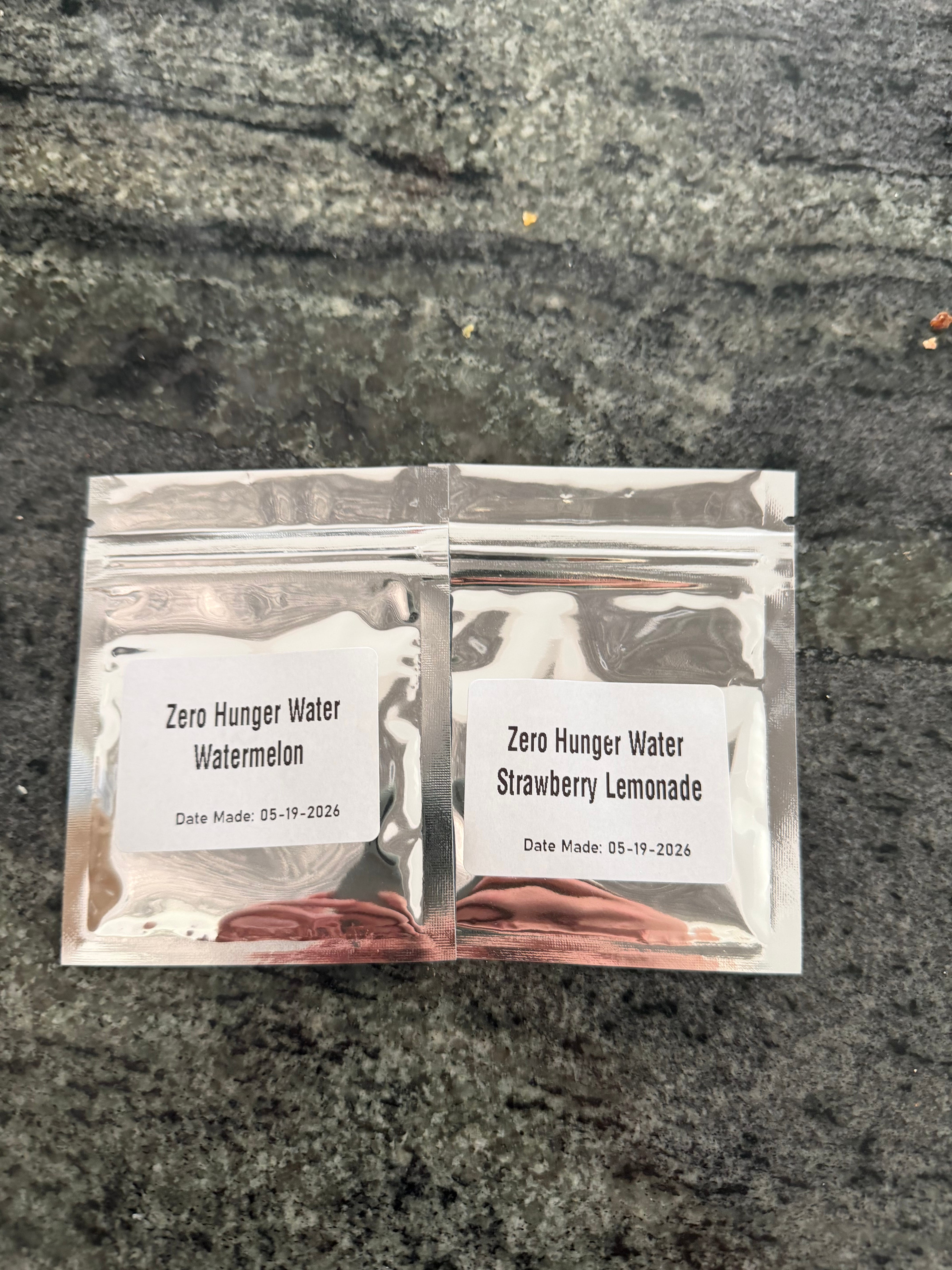
Until the product ships, I make it at home from raw ingredients — my own little kitchen-counter version. The recipe lives inside the free Belly Goes First Guidebook I’ll point you to in a minute. Fair warning: making it from scratch is a pain in the butt. That is exactly why we are building this product. The whole point of Zero Hunger Water is that it should be easy, convenient, and good enough to crave. No artificial anything. Sugar-free. Naturally sweetened. The kind of stick you reach for instead of dread.
No GLP-1 required. No prescription. No needles. No insurance battle.
And — this part matters — no twenty-four-month effectiveness cliff. The research is now clear: GLP-1 medications like semaglutide hit a plateau at roughly two years. The weight loss stops. The side effects don’t. A 2022 four-year extension trial published in Diabetes, Obesity and Metabolism showed weight loss leveling off after approximately sixty-eight weeks of treatment, with little additional benefit despite continued use. (Source.) Zero Hunger Water has no plateau because it isn’t a drug. It is a mineral correction.
If you are currently on a GLP-1 and it is working for you, beautiful — Zero Hunger Water is the off-ramp when you’re ready. If you have never been on one, you do not need to start. This is what comes before. And for most people, this is what comes instead.
A day in my life
A lot of people ask what my day actually looks like. Here it is.
I am on a six-hour eating window — never more than eight, per Dr. Oz. My first meal of the day is at 2 PM. Everything before 2 PM is fasting, and the way I make that fasting comfortable is Zero Hunger Water. I drink at least one packet, sometimes two, between waking and noon — eight to twelve ounces of water with one stick, whenever hunger or thirst flares. Mid-morning is usually when I have my second one.
At 2 PM, I break the fast. The first meal is built around protein and healthy fats — because protein and healthy fats are what actually turn off hunger, and they are exactly the partner that makes sodium safe and your insulin steady. The guidebook walks through the why. Roughly one gram of protein per pound of lean mass is the target — for me that lands around 190 grams a day across the eating window — and the guidebook walks you through how to calculate your own number.
My second meal is around 6 PM, usually with my partner Wyatt. We keep it simple. A ribeye with steamed broccoli, olive oil, salt, and pepper. Bone broth with vegetables. Real food. Nothing complicated.
After 8 PM, the eating window closes. I might have one more Zero Hunger Water before bed if I want it.
That’s the protocol. Two meals, six hours, three Zero Hunger Waters (give or take), strength training in the morning. It is the simplest thing I have ever taught — and it is built on the most rigorous longevity science I have ever read.
But there are three hungers, not one
This is where I want to go further with you than almost any wellness book on the shelf will.
If minerals were the only problem, Zero Hunger Water by itself would be enough. And for many of you, it will be. But for some of us — and I include myself in this, fully — there are two more hungers underneath the physical one. And if we don’t name them, we don’t solve them.
Physical hunger is the mineral hunger. Zero Hunger Water turns this one off at the source.
Emotional hunger is what happens when something inside you is hurting — old trauma, current stress, anxiety, loneliness, grief — and your brain reaches for the fastest, cheapest hit of dopamine it can find. Sugar. Carbs. Sometimes alcohol. Sometimes worse. The food isn’t the problem. The food is the medicine you’re using because nobody taught you a better medicine.
Social hunger is even sneakier. It is the hunger that comes from your environment — the people you’re around, the cues in your home, the rituals you’ve built without realizing it. The dish of candy on the counter. The bottle of wine at six. The late-night TV ritual that turns into a snack ritual. None of these are about your body. All of them produce dopamine. All of them, unchecked, will keep your belly exactly where it is.
These three hungers are the framework of everything I am doing for the rest of my life.
Zero Hunger Water solves the first one. The deeper work on the second and third is what I do every Monday at 5 PM Pacific with my coaching community.
Now — here is what happens when you join us at zerohungerwater.com
This is the part I want you to read twice.
We just launched zerohungerwater.com — a brand-new home for the community we are building around this product. There are already over a thousand of you following along on Instagram and around six hundred on email. If you’re one of them and you haven’t yet added your name at zerohungerwater.com, do it today. That’s the list. That’s the room.
When you put your name in at zerohungerwater.com, you immediately get a thank-you page with two things:
1. The Belly Goes First Guidebook — free. A nineteen-day planner with the at-home Zero Hunger Water recipe, the meal framework I just walked you through, the protein math, and the at-home strength training plan. Everything you need to start, today.
2. My weekly live coaching — free. Normally $97 a month. Free, in good faith, for everyone who joins through zerohungerwater.com before we launch this fall. Four live calls a month with me, every Monday at 5 PM Pacific, on Google Meet. You’ll get the link in the welcome.
That’s it. Both unlocks are on the thank-you page. The only path to the free coaching is through zerohungerwater.com — everyone outside that funnel will pay $97 a month. If you read this letter, you know the door.
Note on timing: I am taking this Memorial Day off, so there is no call tonight. Our first coaching session is next Monday, June 1, at 5 PM Pacific on Google Meet. Sign up at zerohungerwater.com this week and your invitation will be waiting. Can’t wait to meet you.
Here’s what we actually do on those calls.
We cover the first hunger — physical. The science of minerals. How to actually use Zero Hunger Water in your day. How to read your own hunger signals.
We cover the second hunger — emotional. This is where I go deeper than almost anywhere else in my work. When your dopamine system is starved — because of trauma, because of stress, because of a hard season of life — your brain will reach for sugar, carbs, alcohol, or whatever cheap dopamine hits modern life is happy to sell you. The work is teaching you how to replace those hits with wins that actually heal you instead of harm you. One of my favorite tools in that toolbox is teaching my clients how to use AI to write their own anthems. Songs about their own lives. Songs that sound like a top-tier artist made them just for you. I have done this for myself under the name Victor Sol. My album Needed This (Deluxe) is on Spotify here. This is the kind of tool I’m teaching people to build for themselves.
And we cover the third hunger — social. The environment. The cues. The people. The rituals. How to redesign the small architecture of your day so that your home, your evenings, your weekends, and your friend group are not silently undoing the work you’re doing during the day.
Four calls a month. Live with me, on Google Meet. The full three-hunger framework. A $97 value, free for anyone in the community right now, before we launch.
You will not see this offer again the way I am putting it on the table today.
Go now. zerohungerwater.com. Put your name in. I’ll see you next Monday, June 1, at 5 PM Pacific.
What this letter is, finally
I want to close Issue 01 the way I plan to close all of them.
This report is not a newsletter. It’s a window into what I’m building, who I’m building it with, and what I’m learning in the trenches as I build it. Some weeks it’ll be science. Some weeks it’ll be the inside story — like today. Some weeks it’ll be one of my doctor friends sitting in for an essay.
But every Monday, it’ll be here.
If you read it and it moves you, forward it to the one person you think needs it. That’s how this community gets built.
The belly goes first. The hunger turns off. The fat releases. The years come back.
I’ll see you next Monday. And on this Memorial Day, take care of yourselves, take care of the people you love, and take a quiet moment for the ones who gave us this country.
— Jorge
Del Mar, California
Sources cited in this letter
• Su, Y. et al. (2024). Reviews in Cardiovascular Medicine. Waist circumference and all-cause mortality in metabolically healthy individuals.
• Ross, R. et al. (2020). Nature Reviews Endocrinology. Waist circumference as a vital sign in clinical practice — IAS/ICCR consensus statement.
• He, M. et al. (2022). Cell Reports Medicine. Time-restricted eating reduces visceral fat in metabolic syndrome.
• Morris, M. J., Na, E. S., & Johnson, A. K. (2008). Physiology & Behavior. Salt craving and sodium appetite regulation.
• Garvey, W. T. et al. (2022). Diabetes, Obesity and Metabolism. Long-term efficacy and safety of semaglutide — STEP 5 trial.
The Belly Goes First Report is published every Monday morning by Jorge Cruise. Zero Hunger Water launches this fall. Join the community at zerohungerwater.com.